The Cost of Missed Appointments, and How to Prevent Them | My Toolbox Pro
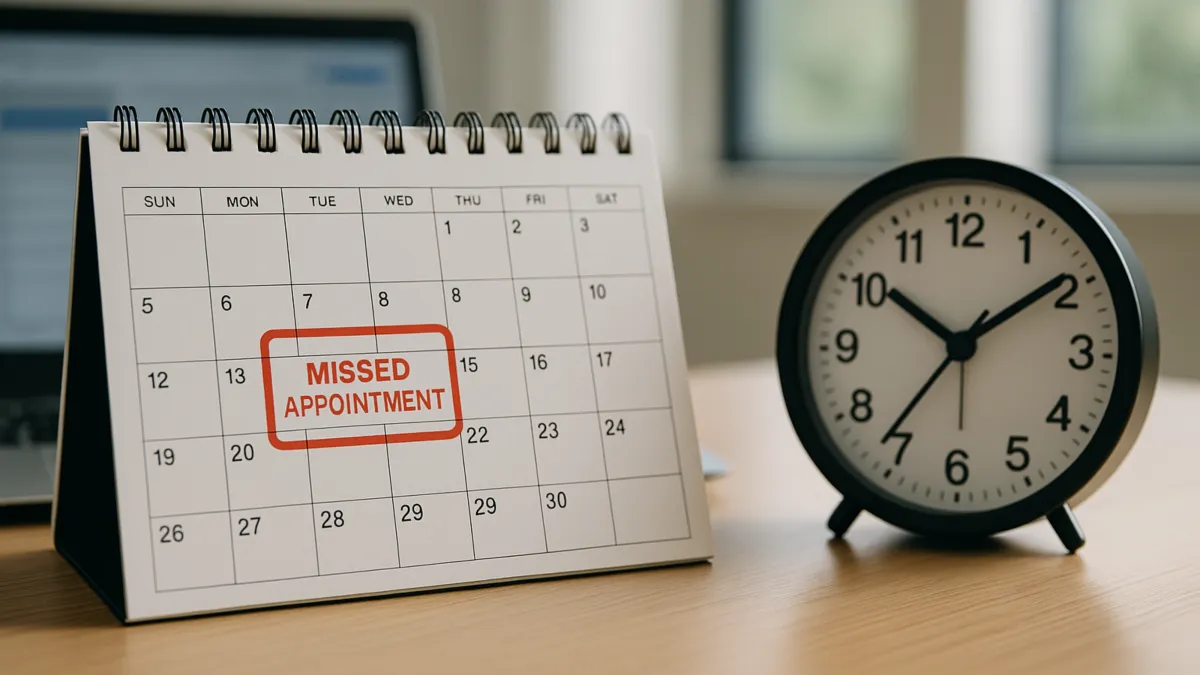
Every empty appointment slot costs more than time. It represents lost income, wasted preparation, and effort that cannot be billed. When these missed bookings pile up, the total loss can quietly reach thousands of dollars each year.
Recent analyses show missed appointments continue to drain revenue across many service industries, especially healthcare, where 2025 estimates place annual losses near $150 billion. Understanding how much they cost, then using automation to prevent them, can recover that income and strengthen long-term growth.
The real cost of no-shows
Industry analyses in 2025 estimate U.S. healthcare providers lose about 150 billion dollars annually from missed appointments, with each slot averaging 200 dollars in lost revenue. Across different sectors, typical no-show rates range from 5 to 25 percent, depending on how scheduling and reminders are managed. (Source: Dialog Health, Curogram, MGMA)
For a smaller business, those numbers still hit hard. A company booking 300 appointments each month at 120 dollars each would lose roughly 3,600 dollars monthly if 10 percent of clients do not show up. Over a year, that becomes more than 43,000 dollars gone. Beyond the revenue loss, there are wasted staff hours and unpredictable workflow that make scheduling less efficient.
Estimating what you lose
To see your own numbers, multiply your total monthly bookings by your average price and then by your no-show rate. The result is the amount you lose each month.
If you schedule 400 appointments at 110 dollars each, your potential revenue is 44,000 dollars. At an 8 percent no-show rate, that means about 3,500 dollars lost per month or more than 40,000 a year. Cutting the rate in half would bring back about 20,000 dollars annually without adding new clients.
Once you track these figures, every improvement in attendance translates directly into measurable profit. Even small changes in confirmation timing or reminder messages can reduce missed appointments within weeks.
How automation helps
Recent studies confirm automation works. A 2025 analysis in Frontiers in Digital Health found that structured text and email reminders reduced no-show rates across multiple clinics. Another 2025 report showed automated reminder systems lowered missed appointments by nearly 38 percent. (Source: Prospyr)
Effective automation begins the moment a booking is made. The system sends a confirmation message with date, time, and location, along with an easy way to confirm or reschedule. Two reminders follow, one 48 hours before and another on the day of the appointment. If the client still misses the slot, the system automatically sends a follow-up within 24 hours and again after a week to encourage rebooking.
These simple steps keep communication consistent and free up your team’s time. Clients appreciate reminders that respect their schedule, and your business benefits from steadier attendance. Over time, tracking responses helps you refine timing, tone, and channel preferences for even better results.
Reclaim your schedule
Missed appointments will always happen occasionally, but they do not have to drain your business. Clear reminders and quick rescheduling options can recover a large share of lost revenue while improving client experience.
If you want to simplify this process and see steady attendance gains, visit My Toolbox Pro connects your scheduling, messaging, and follow-ups in one system so your calendar stays full and your income stays consistent.
Book a demo with My Toolbox Pro now.


